
Exploring PP Plastic Modification Enterprises: The Transformation Journey from Raw Materials to High-performance Materials
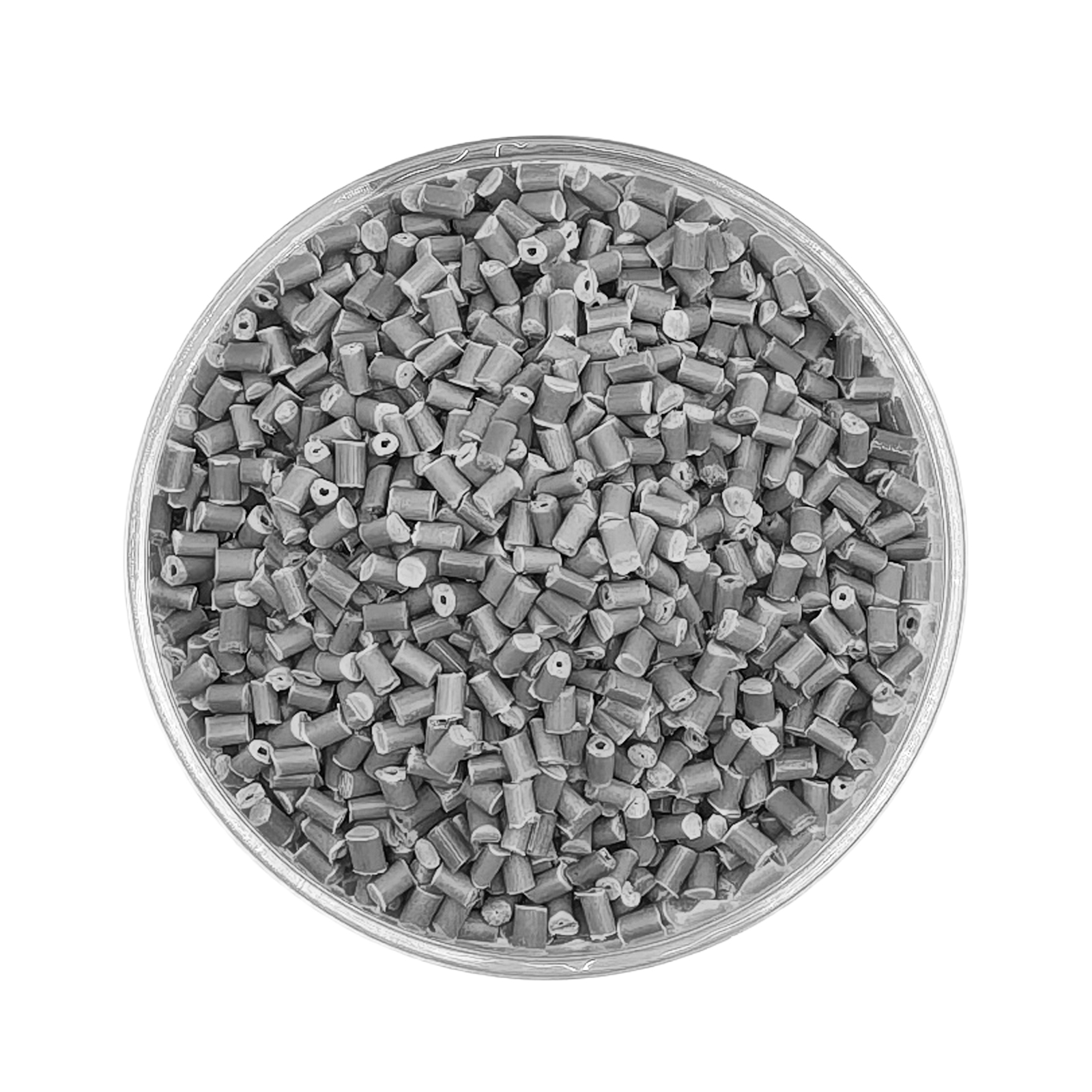
Within the extensive landscape of the plastics industry, PP plastic modification enterprises play an indispensable role. They modify basic polypropylene (PP) through technical means to endow it with superior performance, thus enabling its wide application in fields such as automotive, home appliances, packaging, and medical care. Ranging from simple physical blending to complex chemical grafting, these enterprises drive the progress of materials science through innovation, breathing new life into ordinary plastics.
The core objective of PP plastic modification is to enhance key properties such as heat resistance, impact resistance, and flame retardancy by adding additives or altering molecular structures. For instance, adding glass fibers or mineral fillers can significantly improve the rigidity and heat resistance of PP, making it suitable for components around automotive engines; blending elastomers (e.g., POE) can ameliorate the low-temperature brittleness of PP, meeting the impact resistance requirements for home appliance casings; and incorporating brominated or phosphorus-based flame retardants enables PP to meet the UL94 V-0 flame retardant standard, making it applicable to electronic and electrical enclosures. These modification technologies do not exist in isolation—composite modification has become the mainstream trend. By simultaneously adding multiple additives or adopting multi-step reactions, synergistic improvement of performance is achieved. A case in point is the "high-gloss + scratch-resistant + weather-resistant" three-in-one PP material developed by a modification enterprise, which is realized through the synergistic effect of nano-fillers and special additives.
PP modification is by no means a simple process of "mixing and stirring". Its technical barriers lie in two aspects: formulation design and process control. Formulation design needs to comprehensively consider factors such as the type of additives, addition ratio, and compatibility. For example, the formulation of flame-retardant PP must balance flame retardant efficiency, mechanical properties, and process fluidity. Excessive addition of flame retardants will cause the material to become brittle, while insufficient addition will fail to meet the flame retardant standard. Process control involves parameters such as temperature, rotation speed, and feeding rate of twin-screw extruders. Taking glass fiber-reinforced PP as an example, excessively high screw temperature will lead to the degradation and shortening of glass fibers, resulting in reduced reinforcement effect; conversely, excessively low temperature will cause poor material fluidity, easily leading to the "fiber floating" phenomenon. Therefore, mature modification enterprises usually possess independently developed formulation databases and process parameter models, which constitute their core competitiveness.
Modified PP boasts an extremely wide range of applications. In the automotive field, it is used to manufacture bumpers, dashboards, door panels and other components, and its lightweight characteristics help reduce fuel consumption. In the home appliance sector, it is applied in washing machine inner tubs, air conditioner casings and the like, and its weather resistance and anti-aging properties can extend the service life of products. In the packaging industry, it is utilized for food containers, pharmaceutical bottles, etc., with its barrier properties and safety complying with stringent standards. In the medical field, it serves as the material for disposable syringes, infusion bags and other products, where its biocompatibility and sterility are of vital importance. Notably, with the increasing environmental requirements, recyclable modified PP is emerging as a new trend. For example, adding compatibilizers allows recycled PP to be mixed with virgin materials for use, which not only reduces costs but also minimizes pollution.
From raw materials to high-performance materials, PP plastic modification enterprises have redefined the value of plastics through technology. They are not only material suppliers but also solution providers, meeting the diverse needs of different industries through continuous innovation. If you are interested in materials science, you may wish to delve deeper into more application cases of modified PP; if you are engaged in related industries, you might consider cooperating with modification enterprises to jointly explore the infinite possibilities of materials. In the future, with the advancement of green manufacturing and intelligent manufacturing, PP modification technology is bound to embrace broader development prospects.